
Chia seeds: omega-3 and soaking
Chia seeds absorb liquid and form a gel-like mixture. Along with that distinctive texture, they add fibre, protein and plant omega-3 to food. Their omega-3 is alpha-linolenic acid, or ALA, which the body can convert into EPA and DHA only to a limited extent.1
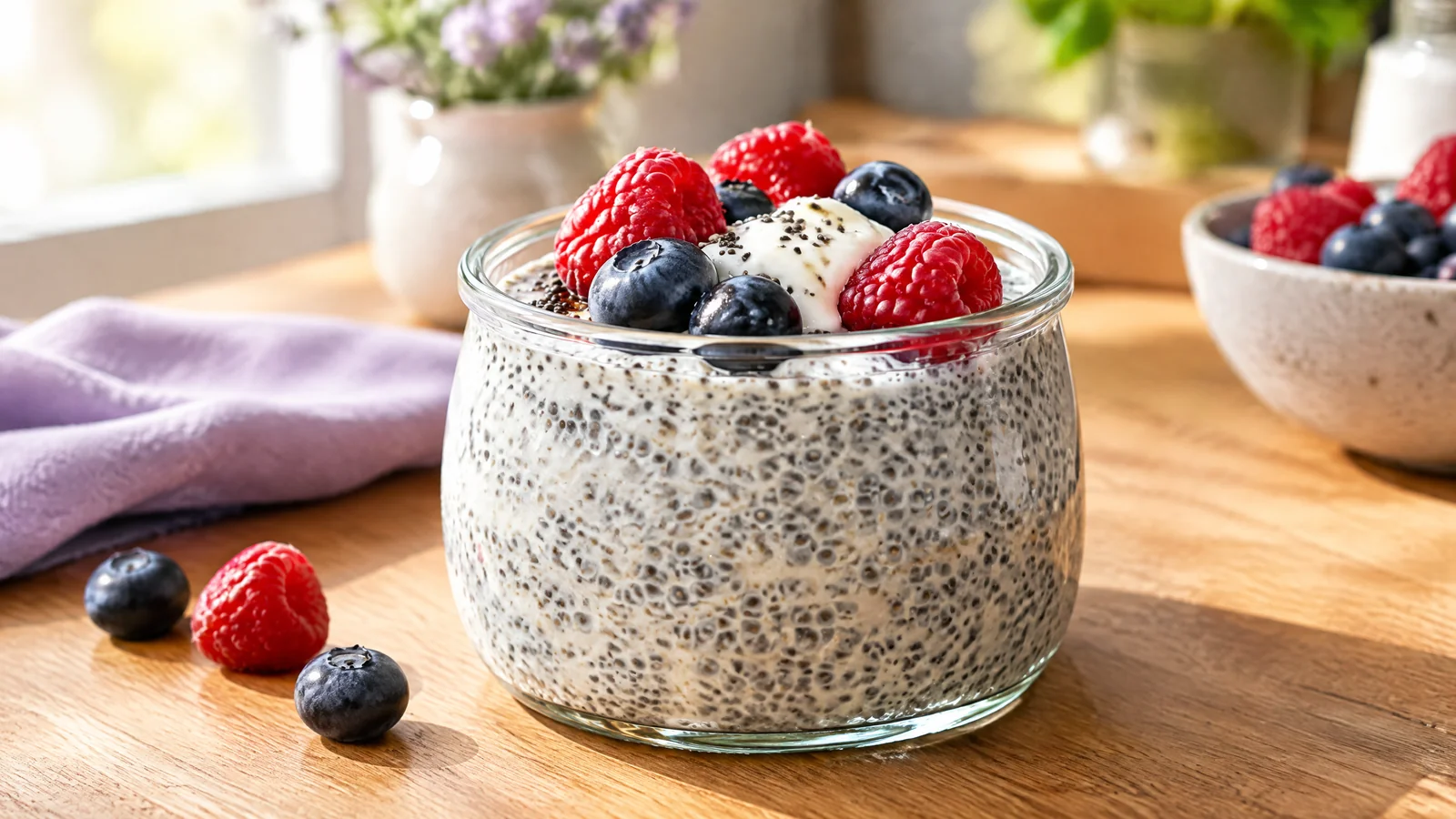
Plant omega-3: how ALA differs from EPA and DHA
“Omega-3” covers several fatty acids, including alpha-linolenic acid, eicosapentaenoic acid and docosahexaenoic acid. Labels usually shorten these names to ALA, EPA and DHA. Each is a different molecule.
ALA is essential, so it must come from the diet. Chia seeds provide this plant form of omega-3. Fish, for example, contains EPA and DHA, with microalgae at the start of their marine food chain. Because conversion from ALA through EPA to DHA is limited, equal amounts of these fatty acids are not equivalent.
When reading an omega-3 claim, check which fatty acid it refers to. Chia can be part of your diet as a plant source of ALA. Foods or products containing EPA and DHA supply different forms.
Flaxseed also provides ALA, but its seed coat makes an important difference. Flaxseed: whole or ground? explains what grinding changes and how packet instructions shape preparation.
Fibre and protein: look at the whole ingredient
There is more to chia than its oil. The seeds also contain protein and fibrous components.2 Looking only at omega-3 leaves out part of the ingredient.
The nutrition label gives values for your particular product. Check whether those values describe dry seeds or a prepared dish. Liquid increases the total weight when you mix it in, while other ingredients contribute nutrients of their own.
“Polyunsaturated fat” and “omega-3” are not interchangeable label terms. Polyunsaturated fats are a broader group, so their total is not an omega-3 figure.
Why liquid changes how chia is used
As the loose seeds absorb liquid, they become moist and form a gel-like mixture. Swelling changes their texture and also matters for preparing them before eating.
Do not swallow dry chia seeds on their own or by the spoonful. Swelling seeds can become lodged in the oesophagus. The American College of Gastroenterology highlights particular concern for people with swallowing difficulties or known narrowing of the oesophagus. In those situations, discuss their use with a doctor first. Allow the seeds to expand fully in sufficient liquid before eating, and follow the preparation instructions on the pack.3
Use the liquid ratio and preparation method in your recipe, together with the pack instructions. The other ingredients affect the texture you are aiming for. For an oat-based breakfast, see Rolled oats: types, preparation and nutrition.
Looking for another seed ingredient for your muesli? Shelled hemp seeds: protein and fat introduces hemp hearts and how to use them in meals.
Allergy and choosing a suitable ingredient
Allergic reactions to chia seeds have been reported, and EFSA considers them in its safety assessment. The cases discussed there do not establish how common these reactions are. Evidence of cross-reactivity also does not mean that everyone with a peanut or sesame allergy automatically reacts to chia.2
With known food allergies, ingredient lists and precautionary allergen labels are part of choosing a product. Seek medical assessment for a suspected chia allergy rather than testing tolerance by trying it again. Clean eating: shopping and recipes explains how to choose foods by their composition and use rather than a superfood label.
Takeaway: connect nutrient form and use
Chia provides plant omega-3 as ALA, along with protein and fibrous components. Choose it for that composition, and allow the seeds to swell fully in enough liquid before eating. ALA remains distinct from EPA and DHA even though all three belong to the omega-3 family.
If you log the meal in The 8 Protocol, enter the chia seeds and the amount you used. That ties the entry to your actual ingredient.
This article explains a food. Individual medical questions and personal suitability belong in a discussion with a qualified professional.
Sources
- NIH Office of Dietary Supplements: Omega-3 Fatty Acids, Health Professional Fact Sheet. Updated 22 August 2025. Fatty acid forms, essential dietary ALA, limited conversion and food sources.
- EFSA NDA Panel: Safety of chia seeds (Salvia hispanica L.) as a novel food for extended uses. 2019, DOI 10.2903/j.efsa.2019.5657. Composition and allergy assessment; a safety assessment rather than a study of benefits.
- American College of Gastroenterology: Watch It Grow: Esophageal Impaction With Chia Seeds. 14 October 2014. Professional society article about a conference case, not a frequency study or recipe evaluation.