
Matcha: catechins, EGCG and longevity
Matcha keeps finely ground tea leaf in the drink rather than leaving it in a strainer. The leaf supplies catechins such as EGCG, along with theanine and caffeine. Researchers study these compounds in relation to redox reactions, metabolism and the processing of stimuli, which also explains their place in longevity discussions.1
What makes matcha different: you consume the leaf
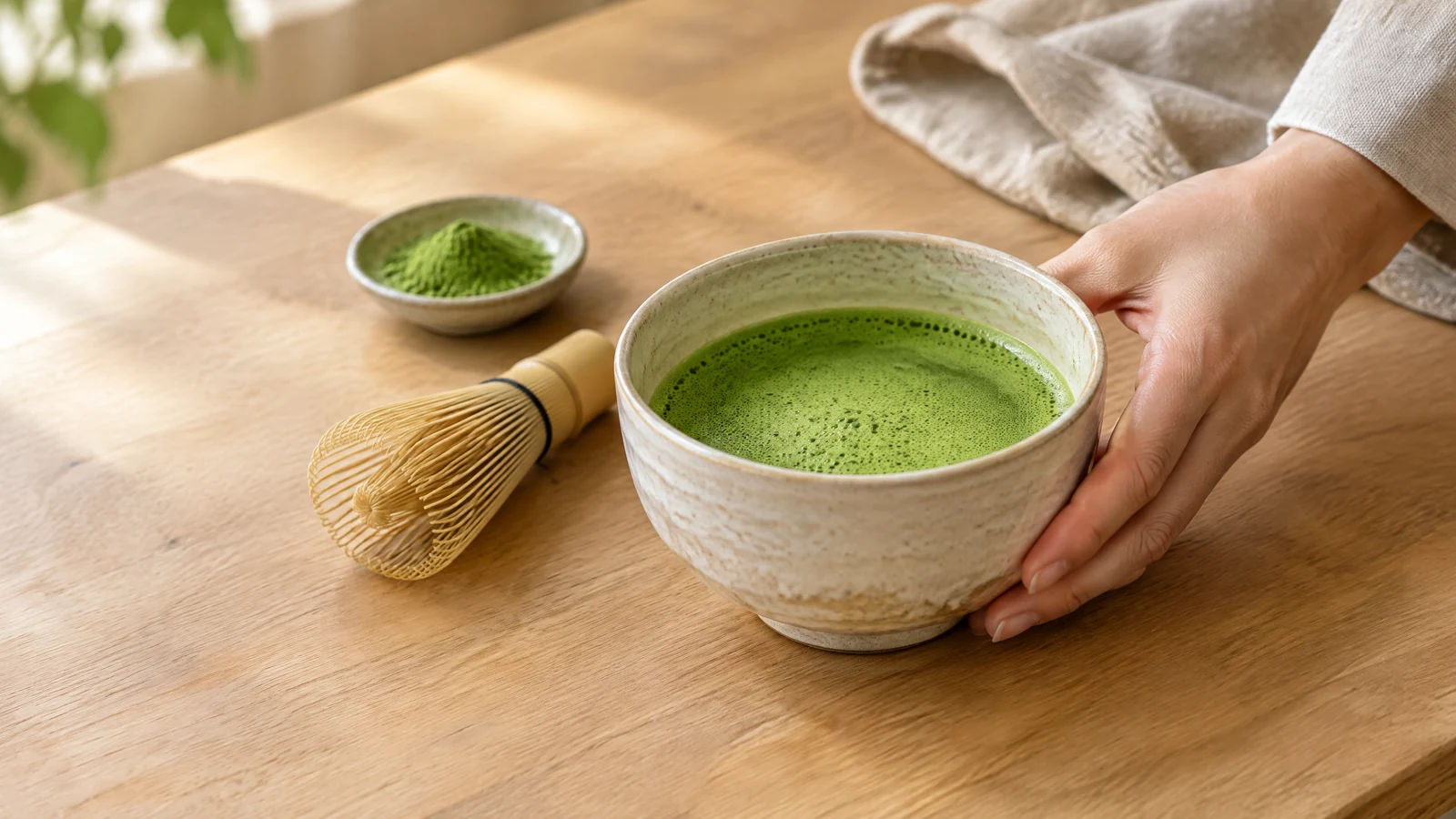
Matcha is traditionally made by shading tea plants before harvest and milling the processed tencha leaves into a fine powder. With an ordinary infusion, water-soluble compounds pass into the drink before you remove the leaves. In matcha, the powder stays in the cup, so you also consume the leaf’s insoluble components.1
Shading and processing affect the tea’s composition. Theanine contributes to umami flavor, chlorophyll gives the leaf its green color, and catechins contribute astringency. A vivid green therefore reflects leaf pigments, not a known amount of EGCG. Cultivation, harvest and the particular product also shape the mix of compounds.1
Catechins and EGCG: what do the terms mean?
EGCG stands for epigallocatechin gallate, one of green tea’s major and most extensively studied catechins. Green tea also contains epicatechin, epigallocatechin and their gallate forms. These names describe related plant compounds: catechins sit within the flavonoids, which in turn belong to the larger polyphenol family.1
Why catechins are called antioxidants
Catechins can participate in redox reactions, in which electrons are transferred. Laboratory experiments measure these reactions with free radicals, for example. These reactive molecules also form during normal cellular processes. Researchers examine both direct chemical reactions and the involvement of plant compounds in cell signaling pathways.2
After you drink the tea, its compounds are digested, transformed and partly absorbed. These steps help determine which compounds become available in the body.12
From tea leaf to body: breakdown products matter too
Tea compounds are processed in the digestive tract. Only a limited amount of EGCG reaches the bloodstream. Some is broken down, with gut microorganisms also taking part. The resulting metabolites, or products of metabolism, are part of what happens to the tea compounds after you drink them.2
The amount of EGCG in a powder is not the same as its concentration in blood: digestion and absorption come between the two. Ground tea leaf also differs from an extract containing concentrated catechins.
Theanine and caffeine: more than catechins alone
Theanine is an amino acid characteristic of tea, rather than a catechin. It contributes to umami flavor and is studied in relation to neural signaling, particularly alongside caffeine. Both occur together in matcha, whereas studies can examine them separately. The amount of theanine does not describe the tea’s total protein content.1
Caffeine acts at adenosine receptors. Adenosine is a messenger made in the body whose receptors help regulate wakefulness and sleepiness. This is why caffeine features in research on matcha and attention. Some studies compare matcha with caffeine alone and a placebo.3
Caffeine near bedtime can affect sleep in some adults.4 Caffeine half-life: what stays in your system explains why earlier servings still count.
Why matcha appears in longevity discussions
Research on matcha touches several questions about nutrition and aging. How are catechins involved in redox processes, cell communication and metabolism? How do theanine and caffeine relate to processing stimuli and performing attention tasks? These questions explain the interest in matcha within longevity research, rather than the tea’s color or price.1
For everyday drinking, matcha is a tea with a distinctive mix of plant compounds. The German Nutrition Society includes unsweetened tea alongside water in its dietary guidelines. Replacing a sweetened drink with it removes that drink’s added sugar. Consider how it fits your usual diet and choose a time of day that also works for your sleep.5
Other plant foods have their own mix of compounds. Rolled oats: types, preparation and nutrition focuses on whole grain and the soluble fiber beta-glucan, while matcha is of interest primarily for its tea compounds. A single antioxidant measurement cannot capture these differences. For a personal example of how meals and drinks fit into a day, see my personal routine.
More EGCG is not a useful shopping rule
The amount of EGCG and other plant compounds varies by product. In a chemical comparison, Meyer and colleagues found substantial differences between the teas examined. Matchas marketed as especially high quality did not consistently lead on either measured phenolic compounds or antioxidant laboratory values. Price, flavor and compound content are separate criteria.6
Green-tea extracts concentrate selected compounds and differ from ground leaf. The distinction matters for safety: EFSA reports indications of liver injury with high-dose EGCG supplements. Its assessment of ordinary green-tea infusions cannot be extended to every amount of matcha powder consumed in a drink.7
Check the powder’s origin, ingredients and consumption guidance. Consuming the leaf also means considering potential residues. The German consumer advice center highlights aluminum and fluoride, with amounts depending on the product. Neither a vivid color nor a “premium” label tells you those amounts.8
Common questions about matcha and its compounds
Is EGCG the same as all catechins combined?
No. EGCG is one catechin, and catechins belong to the polyphenol family. Theanine and caffeine also occur in tea but belong to other groups.
Does matcha automatically contain more catechins than every other green tea?
The product name alone does not establish that. Comparative analyses show differences between teas and matcha products. Consuming the leaf and the catechin content of a particular product are two separate considerations.6
Is an EGCG extract simply concentrated matcha?
An extract targets particular compounds and has a different composition and form of consumption. Ground leaf, infused tea and extract therefore need to be distinguished in safety assessments too.7
Context: The chemical properties of tea compounds explain the research interest in matcha. Digestion and absorption also determine which compounds become available after drinking it. Cell, animal and human studies address different questions and do not establish that matcha extends human lifespan. Discuss consumption with a qualified professional if you are pregnant, breastfeeding, taking medication regularly or have questions about individual tolerance. This caffeinated drink is not intended for children. The article provides general nutrition information, not individual medical advice.18
Sources
- Sokary et al., 2022: critical review of matcha. Compound groups, production and research fields, distinguishing human, animal and cell findings. Retrieved November 1, 2026.
- Pervin et al., 2019: EGCG and its metabolites. Redox properties, absorption and microbial breakdown products. A review including animal and laboratory findings. One author employed by tea company Mitsui Norin. Retrieved November 1, 2026.
- Baba et al., 2021: matcha and caffeine. Adenosine receptors and comparison of matcha, caffeine and placebo capsules in attention tasks. Several authors employed by tea company ITO EN. Retrieved November 1, 2026.
- EFSA: Caffeine. Caffeine sources and sleep effects. 2015 safety assessment. Retrieved November 1, 2026.
- DGE: Food-based dietary guidelines. Drink choices within the eating pattern of healthy adults aged 18 to 65 in Germany. Retrieved October 31, 2026.
- Meyer et al., 2023: analysis of green teas. Original study of catechin composition, phenolic compounds and antioxidant laboratory values. Retrieved November 1, 2026.
- EFSA, 2018: safety of green-tea catechins. Distinguishes infusions and concentrated food supplements. Retrieved November 1, 2026.
- German consumer advice center: Matcha. Product terminology, residues, caffeine and particular care with medication. Retrieved November 1, 2026.