
My kettlebell training at home
I usually train with kettlebells and rings four to five times a week. A regular session takes about 45 minutes, from the warm-up through the main workout to mobility work. The example kettlebell session here also includes floor exercises. I usually train for two days, then take a rest day. Sometimes I do an extra short session on that third day instead.
This is my personal routine, not a recommendation to do the same. Everyone needs to find out what works for them.
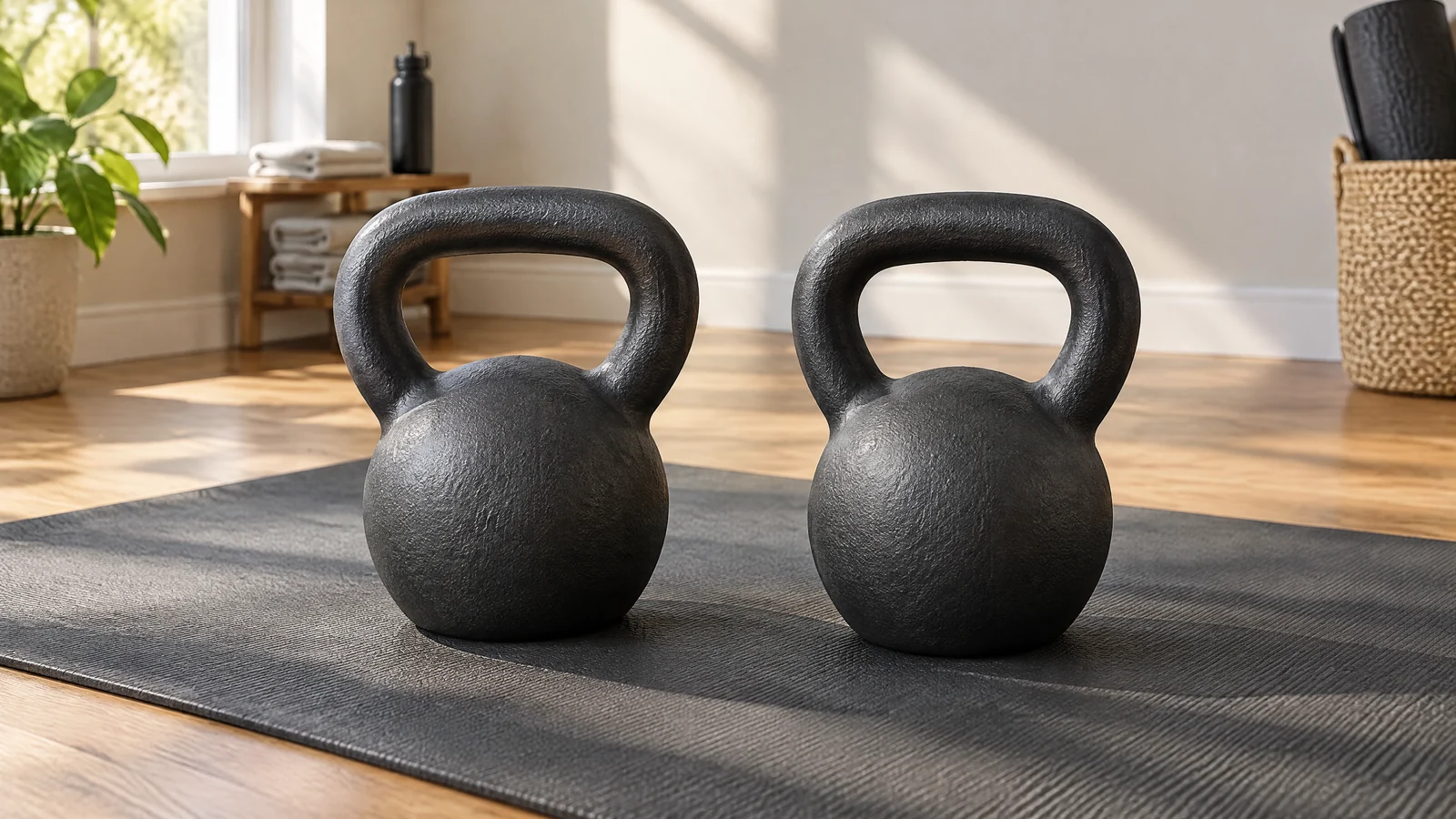
Leaving the gym for training at home was a deliberate decision. My previous training felt too focused on bodybuilding. I want to do more with kettlebells and rings, and I enjoy this way of training more. Above all, it fits my morning: after training and a shower, I can start work straight away.
Calisthenics and kettlebells: strength without a gym explains the exercises and accessible starting points, with two sessions to alternate.
My session has three parts
At the moment I follow a fixed kettlebell programme in a training app. That gives me a plan for the morning. The session is structured like this:
- Warm-up: I begin with the programme’s warm-up section.
- Main workout: The kettlebell or ring block follows.
- Mobility: Mobility exercises finish the session.
The 45 minutes or so cover the whole session, including the warm-up and mobility work. For now, I follow the structure of the fixed programme. Later, I’d like to put together my own programme with occasional changes, but that isn’t how I train yet.
An example kettlebell session from my home training
On day 1, for example, I warm up and then do a swing EMOM. Squats with two kettlebells and push-ups follow, with mobility work at the end. The overview shows the sequence using exercises that are already familiar. It isn’t an introduction to their technique.
1. Warm-up: one minute each
- Bounce
- Pump Stretch
- Knee Bends
- Lizard Twist
- Windshields
I work through these five warm-up exercises in order. The names match those used in the programme.
2. Swing EMOM: ten rounds
At the start of each minute, I do ten single-arm kettlebell swings, five on each side. The remainder of the minute is rest. I repeat this sequence for ten rounds.
This is the first main block of this training day. It is separate from the short additional calisthenics session I describe further down.
3. Squats and push-ups: five rounds
- Ten squats with two kettlebells, called “Double KB Squat” in the programme.
- Twenty push-ups.
I do this combination five times, without a fixed minute-by-minute schedule and with breaks as needed. If the remaining push-ups can't otherwise be completed with good form, the programme offers push-ups from the knees as an easier variation.
4. Mobility: one minute and 15 seconds each
- Down Dog Stretch
- Updog Stretch
- Straddle Stretch
- Seated Twist Stretch, left
- Seated Twist Stretch, right
- Plow Stretch
The positions are not pushed into a painful or forced range of movement. This part also assumes familiarity with each exercise.
That makes four blocks in the example session: warm-up, swing EMOM, squats and push-ups, then mobility. The occasional short extra EMOM is a separate session.
Two training days, then a choice for the third
My rest day doesn’t fall on a fixed weekday. It usually comes after two training days. On a morning when I don’t train, I do about ten minutes of gentle stretching, then have a matcha and start work.
Occasionally I choose an extra strength block instead. For this, I choose exercises for areas where I don’t currently feel soreness or fatigue. I go by how I feel and also look at WHOOP’s recovery display. A number from a device isn’t a general clearance to train.
Even ten minutes of strength work count towards my weekly training volume. A morning with pull-ups is therefore a training day for me, unlike a morning with a little gentle stretching.
Why I sometimes add an EMOM
For the extra EMOM, I sometimes use ten minutes with ten rounds. EMOM stands for “Every Minute on the Minute”: each new set starts at the beginning of a minute. Whatever time remains after the set is rest.
I use it to fit in extra sets and repetitions in a calisthenics style, with pull-ups, for example. Within a session, I repeat the same sequence each minute rather than automatically switching to another exercise.
For example, I do ten repetitions of one exercise each minute for ten rounds. Sometimes I also combine pull-ups and biceps goblet curls directly after one another. This describes my own volume, not a suggestion for your first session. Learning exercise technique and choosing a suitable starting point are separate from my personal account.
What I changed from my gym routine
Since leaving the gym, I train at home in the morning before work. In terms of organising my day, that’s the biggest change. I show how reading, training, showering and starting work follow one another in the overview of my personal routine.
I enjoy this different style of training more, and it fits my morning. Both are part of the change for me.
Context: This is my own training practice, not a prescribed workload. High repetition counts and extra training don’t automatically suit your starting point. Stop if an exercise causes pain. Seek qualified advice for unclear symptoms or limits on exertion.
The next step that fits you
If you’d like to start kettlebell training, the beginner’s guide to choosing a weight and learning the first exercises explains the first steps. My weekly volume isn’t a template for getting started. If you already train and mainly want to organise your working day, consider the time you actually have available.
I record my meals in The 8 Protocol. The app doesn’t replace my training programme. For kitchen planning around a session, there is the guide to eating before a workout.
Source and context
The sequence, frequency and workload describe my own practice as of October 2026. I am Nils, the developer of The 8 Protocol. The illustration at the top is schematic and not a photograph of my training.