
Walnuts: What the kernels contain
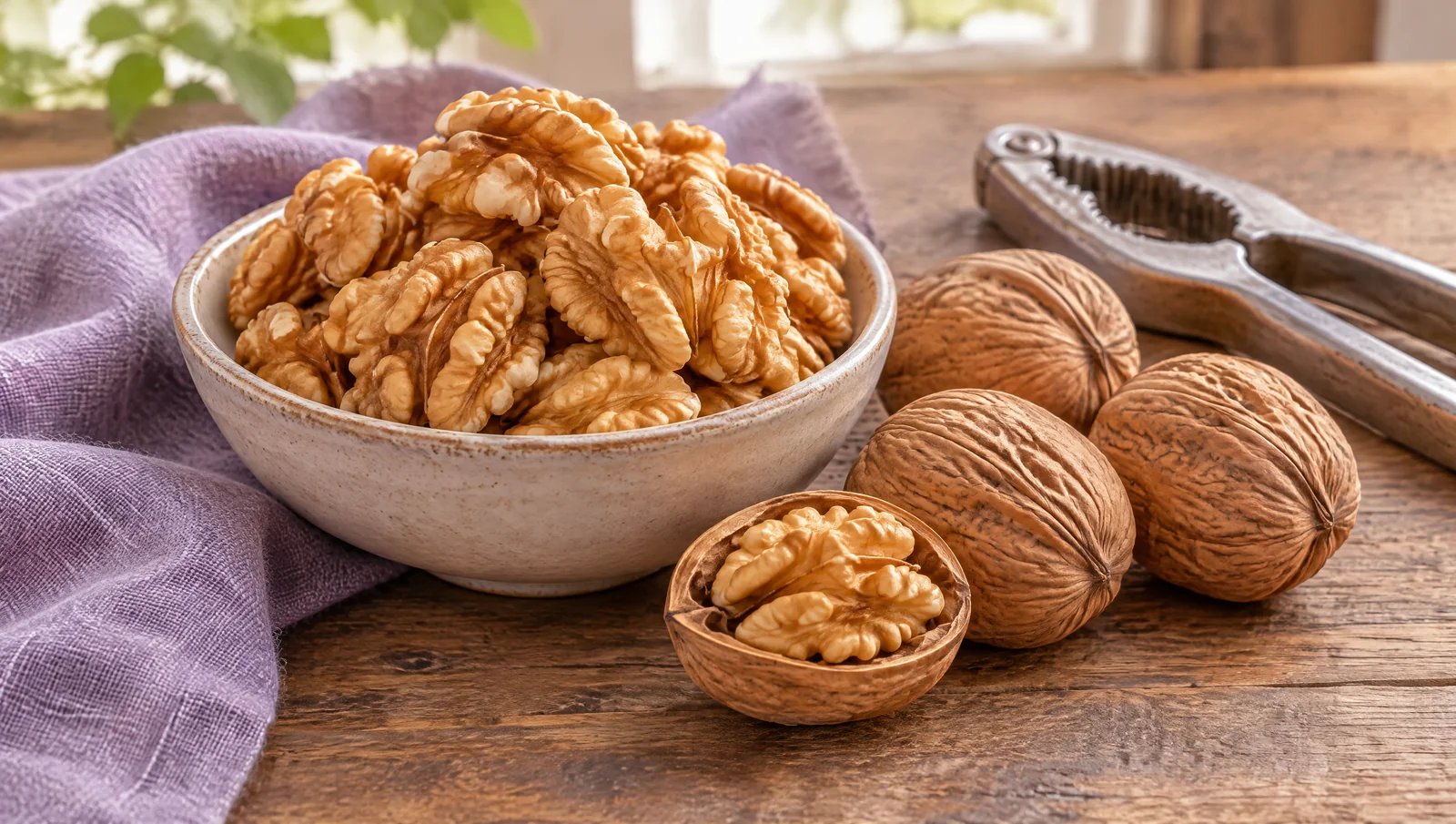
Walnuts have a crisp bite, a mild centre and a slightly bitter skin. Most of the fat in these pale kernels is unsaturated. They also contain alpha-linolenic acid, or ALA, a plant-based omega-3 fatty acid. This is one reason walnuts attract attention among people interested in nutrition and longevity. ALA is a different fatty acid from the omega-3s EPA and DHA. 12
You can eat walnuts straight from the bag or add them to a meal. They do not need soaking or grinding first. Their distinctive flavour works with creamy oats as well as savoury dishes.
Fat, protein and fibre in a serving
The industry association Nuthealth lists the following rounded values for raw, unsalted walnut kernels. Its serving size is one US ounce, or 28.35 g of edible kernels. The shells are not included. 2
| Nutrient | Per 28.35 g of kernels |
|---|---|
| Energy | 190 kcal |
| Fat | 18 g |
| Protein | 4 g |
| Fibre | 2 g |
| Alpha-linolenic acid, ALA | 2.5 g |
Source accessed 19 November 2026. These are rounded reference values from this particular overview. The nutrition label on your packet may give different values. ALA is included in total fat, not an additional amount of fat. 2
That gives walnuts a clear role in a meal: they add fat, some protein and fibre. For a high-protein breakfast, think of them as an addition to a protein source such as quark. Our guide to a high-protein breakfast without powder has more ideas.
What plant-based omega-3 means
ALA is an essential fatty acid, which means the body needs to obtain it from food. It can convert ALA into EPA and then DHA, but this conversion is limited. A given weight of ALA therefore does not represent the same amount of EPA or DHA. 1
This distinction is useful when choosing foods. Walnuts provide ALA. Oily fish also provide EPA and DHA. When comparing omega-3 sources, look at the type of fatty acid first and its amount second. Flaxseed contains ALA too. 1
These are practical differences between foods that a broad label such as “omega-3” can hide.
Ways to use the kernels
Break walnut kernels into smaller pieces just before eating if that is the texture you want. Added as a topping to warm rolled oats, their flavour stands out. They add crunch to a creamy meal. You can also chop them roughly and scatter them over roasted vegetables just before serving.
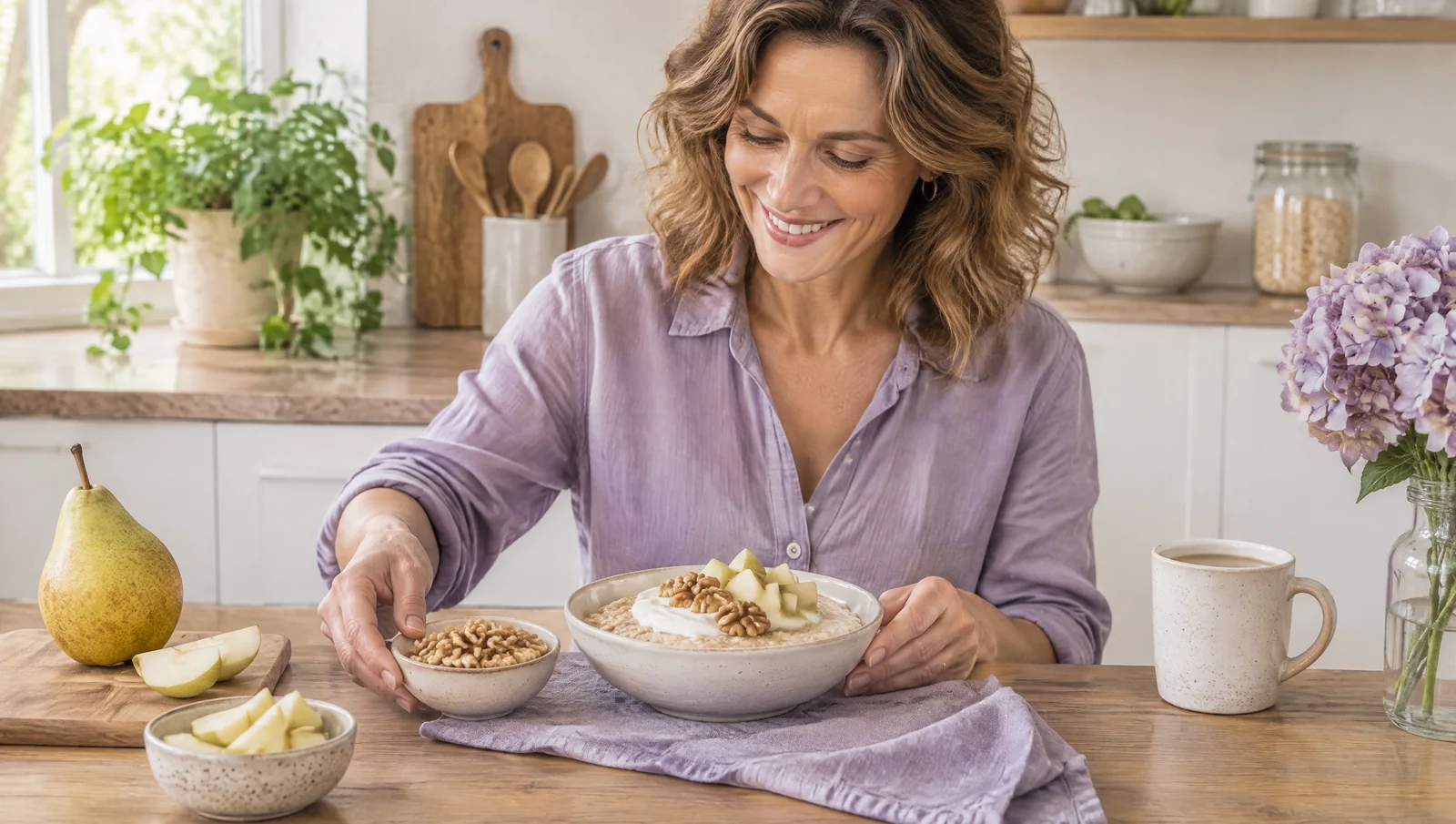
For a simple breakfast, combine oats with plain yoghurt and pieces of pear, then add walnuts. Choose the amount of walnuts to suit the other ingredients and the size of your meal.
If you have a known walnut allergy, leave walnuts out. Check the ingredients of nut mixes, baked goods and prepared dishes too. Walnuts are tree nuts that can trigger allergic reactions. 4
Storage: keep kernels whole until you need them
Keep shelled and chopped nuts in a tightly closed container in the fridge. Nuts still in their shells need a cool, dark, dry and well-ventilated place. Heat, light and moisture encourage spoilage. Buy an amount you can use and chop or grind the kernels when needed. 3
Do not keep eating nuts with visible mould, a musty or rancid smell, or an unusually bitter taste. Spoiled nuts can contain mould toxins. The German Nutrition Society advises against eating nuts with visible mould, discolouration, a musty smell or a bitter taste. 3
Logging walnuts in a food diary
To record your portion, weigh the kernels without their shells and choose the matching food entry. An entry for plain walnuts will not describe a caramelised nut mix. For packaged products, use the ingredient list and nutrition label to help identify the right entry.
In The 8 Protocol, you can record foods and their amounts in your food diary. For breakfast, enter the walnuts alongside the other ingredients. Our guide to nutrition values and portions explains how food amounts relate to nutrition information.
The takeaway
Walnuts combine a distinctive flavour with mostly unsaturated fats, ALA, some protein and fibre. Their specific composition is more useful than a label such as “superfood”. In everyday meals, use the kernels in an amount that suits the dish, distinguish ALA from EPA and DHA, and store your supply carefully.
Sources
- NIH Office of Dietary Supplements: Omega-3 Fatty Acids, Health Professional Fact Sheet. Updated 22 August 2025, accessed 19 November 2026. Introduction and Sources of Omega-3s: essential ALA, limited conversion and the different fatty acids supplied by foods.
- Nuthealth: Walnuts. Nutrition overview for raw, unsalted kernels, 1 oz = 28.35 g, accessed 19 November 2026. An industry source used for composition, not as evidence of health effects.
- German Nutrition Society: Eat pulses and nuts regularly. Storage and spoilage guidance, accessed 19 November 2026. Source in German.
- FDA: Food Allergies, What You Need to Know. Walnuts as a tree nut allergen and checking ingredient lists, accessed 19 November 2026.